Understanding the OB Wheel: How Healthcare Providers Calculate Your Estimated Due Date (EDD)
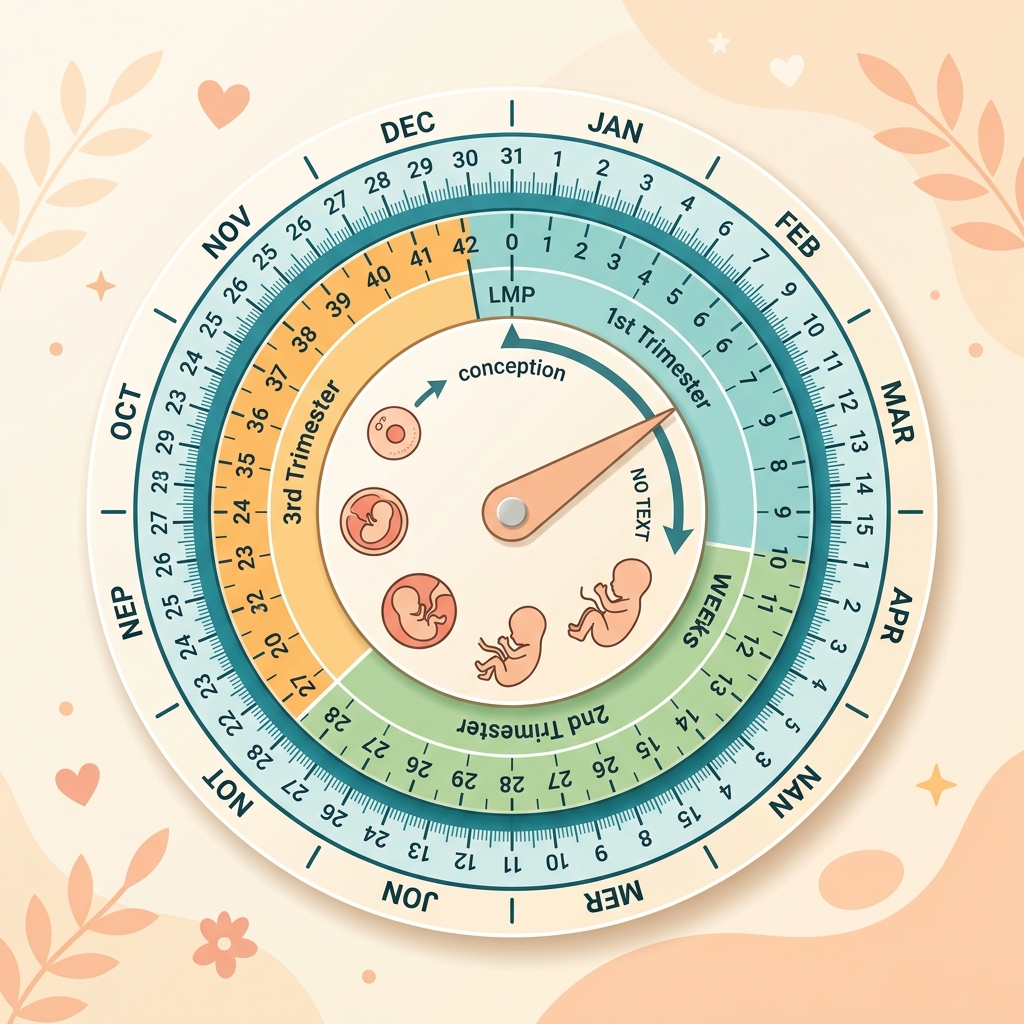
When you first confirm your pregnancy, one of the very first questions that springs to mind is: “When will my baby arrive?” In the clinical world, this critical date is known as the Estimated Due Date (EDD). To determine this, obstetricians, midwives, and fertility specialists have relied for decades on a circular, slide-rule device known as the obstetric wheel or OB wheel.
Today, while physical plastic wheels are still found in clinic pockets, digital versions like our OB Wheel Calculator have modernized the process, offering instant, error-free mathematical calculations. In this comprehensive guide, we will unpack how the OB wheel works, the clinical formulas powering it, the differences between gestational and fetal age, and how your due date is calculated.
What is an OB Wheel Calculator?
A traditional obstetric wheel is a hand-held calculator consisting of two concentric cardboard or plastic discs. The outer disc contains a calendar grid showing the 365 days of the year, while the inner disc is marked with pregnancy weeks (from week 1 to 42) and milestones such as trimesters, ultrasound screening windows, and fetal weight estimations.
By rotating the inner disc to align a pointer (usually marked “LMP” or “First Day of Last Period”) with the calendar date of your last period, the wheel automatically indicates your:
- Estimated Due Date (EDD)
- Current gestational age (how many weeks and days pregnant you are today)
- Transition dates between the first, second, and third trimesters
- Key dates for prenatal screenings and laboratory tests
A digital OB Wheel calculator performs these exact calculations electronically, eliminating alignment slips, leap year offsets, and manual conversion errors.
The Math Behind the Wheel: Naegele’s Rule
At the core of almost every pregnancy wheel is Naegele’s Rule, a standard formula named after Franz Karl Naegele, a 19th-century German obstetrician.
Naegele’s Rule assumes a standard human gestation period of 280 days (40 weeks) from the first day of the last menstrual period (LMP). It also assumes a regular 28-day menstrual cycle, with ovulation occurring exactly on day 14.
How to Calculate Due Date Using Naegele’s Rule
To calculate your due date manually using Naegele’s Rule, you follow a simple three-step formula starting from the first day of your LMP:
- Identify the first day of your last menstrual period (LMP).
- Subtract 3 calendar months from that date.
- Add 7 days and add 1 year.
Practical Example:
Let’s say the first day of your last period was May 10, 2026:
- Step 1 (LMP): May 10, 2026
- Step 2 (Subtract 3 months): February 10, 2026
- Step 3 (Add 7 days & 1 year): February 17, 2027
Thus, the Estimated Due Date (EDD) is February 17, 2027.
Mathematically, this is equivalent to adding exactly 280 days to your LMP. Modern digital calculators perform this addition directly, ensuring that variations in month lengths and leap years are accounted for with absolute precision.
Gestational Age vs. Fetal Age: The 2-Week Difference
One of the most common points of confusion for expectant parents is their official “week of pregnancy.” If you conceived two weeks ago, why does your doctor say you are four weeks pregnant?
The answer lies in how clinical dating is structured:
- Gestational Age (Clinical Standard): Calculated from the first day of your last menstrual period. Because most women do not know the exact day they ovulated or conceived, medical professionals use the LMP as a reliable, objective starting line. As a result, gestational age includes the roughly two weeks before you actually conceived.
- Fetal Age (Conceptional Age): Calculated from the actual date of conception (typically fertilization). Fetal age is generally two weeks shorter than gestational age.
| Clinical Parameter | Gestational Age | Fetal (Conceptional) Age |
|---|---|---|
| Starting Point | First day of LMP | Date of Ovulation / Conception |
| Duration of Pregnancy | 40 Weeks (280 Days) | 38 Weeks (266 Days) |
| Who Uses It? | OB-GYNs, Midwives, Hospitals | Embryologists, Developmental Studies |
Because the OB wheel is designed for clinical management, it measures gestational age. This standard ensures that prenatal tests, screenings, and fetal growth milestones are tracked in a unified language worldwide.
Limitations of the Standard OB Wheel
While Naegele’s Rule and the standard OB wheel are highly effective for most pregnancies, they have a major limitation: they assume a perfect 28-day cycle with ovulation on day 14.
If your menstrual cycle is shorter, longer, or irregular, standard calculations will be off. For instance, if you have a 35-day cycle, you likely ovulate on day 21 rather than day 14. If a standard wheel is used, your due date will be calculated a week earlier than it should be, potentially leading to unnecessary interventions or incorrect assessments of fetal growth.
To correct this, clinicians use alternative methods:
- Parikh’s Rule: This mathematical formula adjusts the due date based on your actual cycle length. You can learn more about how to calculate due dates for irregular cycles in our detailed guide to Parikh’s Rule for Irregular Menstrual Cycles.
- Ultrasound Dating: In cases of highly irregular cycles, an early ultrasound is used to measure the embryo and establish a final due date. Read our comprehensive analysis comparing Ultrasound Dating vs. LMP to understand how doctors reconcile these two dating methods.
- IVF Transfer Dating: When pregnancy is achieved via assisted reproductive technology, the conception date is known precisely down to the hour. In these cases, standard LMP dating is bypassed in favor of specialized IVF dating formulas. Learn more in our IVF Due Date Calculator Guide.
How Healthcare Providers Use the OB Wheel for Milestones
The OB wheel is not just a due date finder; it is a clinical roadmap. Healthcare providers rotate the wheel during your prenatal visits to ensure you are meeting crucial health checkpoints:
- Dating and Viability Scan (Weeks 7–10): Validates the pregnancy in the uterus and measures the crown-rump length (CRL) to verify the due date.
- Nuchal Translucency (NT) Screen (Weeks 11–13): A combined blood test and ultrasound screening for chromosomal conditions.
- Anatomy Scan (Weeks 18–22): A detailed ultrasound checking the structural development of the baby’s organs, limbs, and placenta.
- Glucose Challenge Test (Weeks 24–28): Screens for gestational diabetes.
- Group B Strep (GBS) Screening (Weeks 35–37): A routine swab to check for bacteria that could affect the baby during delivery.
By tracking these windows relative to your gestational age, the OB wheel ensures you receive the right care at the exact right time.
Conclusion
The OB wheel remains an indispensable tool in modern obstetrics. Whether in its traditional circular plastic form or as a responsive online calculator, understanding the math and clinical assumptions behind it empowers you to actively participate in your prenatal journey.
If you have a regular menstrual cycle, using Naegele’s Rule will give you a highly reliable estimate of your due date. However, remember that only about 5% of babies are born on their exact due date—think of your EDD as an anchor point for a healthy, well-monitored window of birth!
Written by Dr. Sarah Jenkins, OB-GYN
Dr. Sarah Jenkins is an experienced Obstetrician-Gynecologist dedicated to helping women navigate their pregnancy journeys with clinical clarity, evidence-based practices, and compassionate support.
Expert Reviewed & Fact Checked